Check Breast Milk Storage Duration and Safe Thawing Rules
Key Takeaway
Expressed breast milk stays safe for up to 4 hours at room temperature, 3 days in the refrigerator, and 3 to 6 months in the freezer (KDCA and MOHW guidelines, 2026). Always warm it gently before feeding.
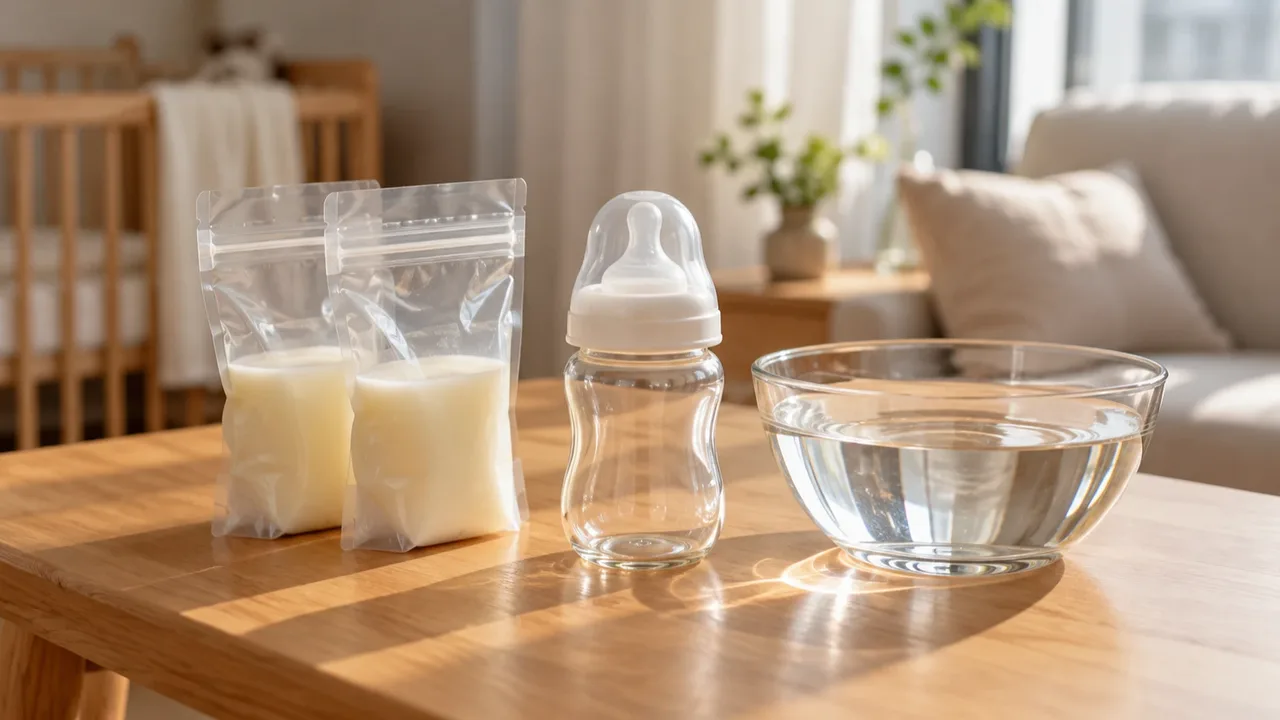
How Long Can Milk Be Kept in Each Storage Location?
Because breast milk is raw and unpasteurized, storage stability depends heavily on maintaining proper temperatures. Recommended time limits across different settings are shown below.
| Storage Location | Target Temperature | Recommended Duration | Key Precaution |
|---|---|---|---|
| Room Temperature | Below 25°C | Up to 4 hours | Avoid direct sunlight and heat; refrigerate immediately in summer |
| Refrigerator | Below 4°C | Up to 72 hours (3 days) | Store on deep interior shelves rather than inside door compartments |
| Standard Freezer | Below -18°C | 3 to 6 months | Place in back of freezer; rotate stock by expressed date |
| Thawed in Fridge | Below 4°C | Within 24 hours | Count from complete thaw; never refreeze |
Room temperature holding applies only when ambient indoor temperatures do not exceed 25°C. During summer months or when heating systems run in winter, placing milk directly into the refrigerator right after expression is far safer. Avoid door shelves where temperatures fluctuate frequently every time the door opens, and choose a stable inner shelf instead.
What Is the Safest Way to Thaw and Warm Milk?
Moving frozen milk into the refrigerator the night before feeding is the safest thawing technique. Leaving frozen containers to defrost on a countertop allows surface temperatures to warm up too early, encouraging bacterial growth.
When urgent thawing is necessary, hold the sealed milk bag under cool or lukewarm running tap water. Once completely liquefied, warm the milk in a bowl of warm water (around 40°C) until it reaches comfortable body temperature (about 36–37°C).
Never boil breast milk on a stove or warm it inside a microwave oven. Excessive heat breaks down protective immunoglobulins and enzymes, and microwave hotspots can easily scald an infant's mouth.
Can Thawed Breast Milk Be Refrozen?
Thawed breast milk must never be refrozen under any circumstances. Ice crystal formation and thawing damage milk fat globules and cell structures while reducing antimicrobial properties, significantly raising contamination risks.
Milk thawed in the refrigerator should be consumed within 24 hours from the moment thawing completes. Any unused portion remaining after 24 hours must be discarded promptly without hesitation.
Milk warmed rapidly in warm water baths should be consumed within 2 hours. If milk must be transported away from home, store it in an insulated cooler bag packed with ice packs and warm it only immediately before feeding.
How Should Storage Bags Be Filled and Stored?
Store expressed milk in pre-sterilized, food-grade storage bags certified under safety standards or in boiled glass bottles. Packaging single feeding portions per container prevents unnecessary waste during daily feeds.
Because liquids expand upon freezing, fill storage bags to only 70–80% of marked volumetric capacity to prevent tearing. Gently squeeze excess air from the top before sealing zipper locks securely to reduce oxidation.
Clearly record the date, time of expression, and volume on each bag using a permanent waterproof marker. Place newly frozen packets behind older ones so that older milk is naturally used first.
What Should Be Done with Leftover Milk After Feeding?
When a baby drinks from a bottle, saliva and oral microflora wash back into the remaining milk and begin multiplying immediately. Consequently, leftover milk must never be returned to the refrigerator and should be discarded within 1 to 2 hours of starting the feed.
When feeding volumes vary unpredictably during early infancy, dividing milk into smaller batches of 60 to 80 ml helps avoid wasting precious milk. Parents can quickly warm an additional small bottle if the baby shows signs of remaining hunger.
All recommendations and timelines reflect official standards from the KDCA and MOHW verified on October 26, 2026. For premature infants or babies with specific medical considerations, always consult a pediatrician for personalized feeding and storage protocols.
Frequently Asked Questions
Can frozen breast milk be quickly warmed in a microwave?
Microwaving is never recommended because uneven heating creates dangerous hot spots that can burn a baby's mouth, while high heat damages delicate antibodies and vital nutrients. Warming the bag gently in a bowl of warm water is the safest method.
Is refrigerated breast milk spoiled if it separates into layers?
Unhomogenized natural breast milk naturally separates into milk and cream layers as milk fat floats to the top over time. This is entirely normal, and gently swirling the container in a circular motion before feeding blends the milk back together.
Can milk left in the bottle after a feeding be saved in the fridge for later?
Once an infant's mouth touches the bottle nipple, bacteria from the mouth enter the milk and multiply rapidly. Any milk remaining in the bottle must be discarded if not finished within 1 to 2 hours.